
The Flint water crisis began in 2014 after the City of Flint changed its drinking water source to the Flint River without proper corrosion-control treatment, allowing lead and other contaminants to enter the water supply. The crisis exposed thousands of residents to potential health risks and had lasting effects on public health, community trust, and the well-being of Flint families.
The Flint Water Crisis
-
About the Crisis: The Flint water crisis has had profound and lasting effects on the health and well-being of the Flint community. In April 2014, the City of Flint changed its drinking water source from Lake Huron water supplied through Detroit to the Flint River. Without appropriate corrosion-control treatment, the new water source caused pipes and plumbing to corrode, allowing lead and other contaminants to enter the drinking water. Flint returned to its previous water source in October 2015, but by that time thousands of residents had potentially been exposed to lead.
The crisis demonstrated how closely infrastructure, environmental conditions, government decision-making, and public health are connected. In addition to concerns about lead exposure and its effects on health and child development, the crisis affected community trust and contributed to significant stress and behavioral health concerns among residents.
Significant work has taken place in the years since the crisis to improve Flint’s water system, replace infrastructure, monitor water quality, connect residents with services, and understand the long-term effects of the crisis. In May 2025, the U.S. Environmental Protection Agency lifted the Safe Drinking Water Act emergency order that had been in place since 2016, reporting that Flint had completed the requirements of the order and that the water system was in compliance with federal lead standards.
-
Flint Registry: This registry was created to support people who were impacted by the Flint water crisis. Built with the Flint community and based in Flint, the Registry connects people with programs and services that support health and wellness while also helping researchers and community partners better understand the long-term effects of the crisis.
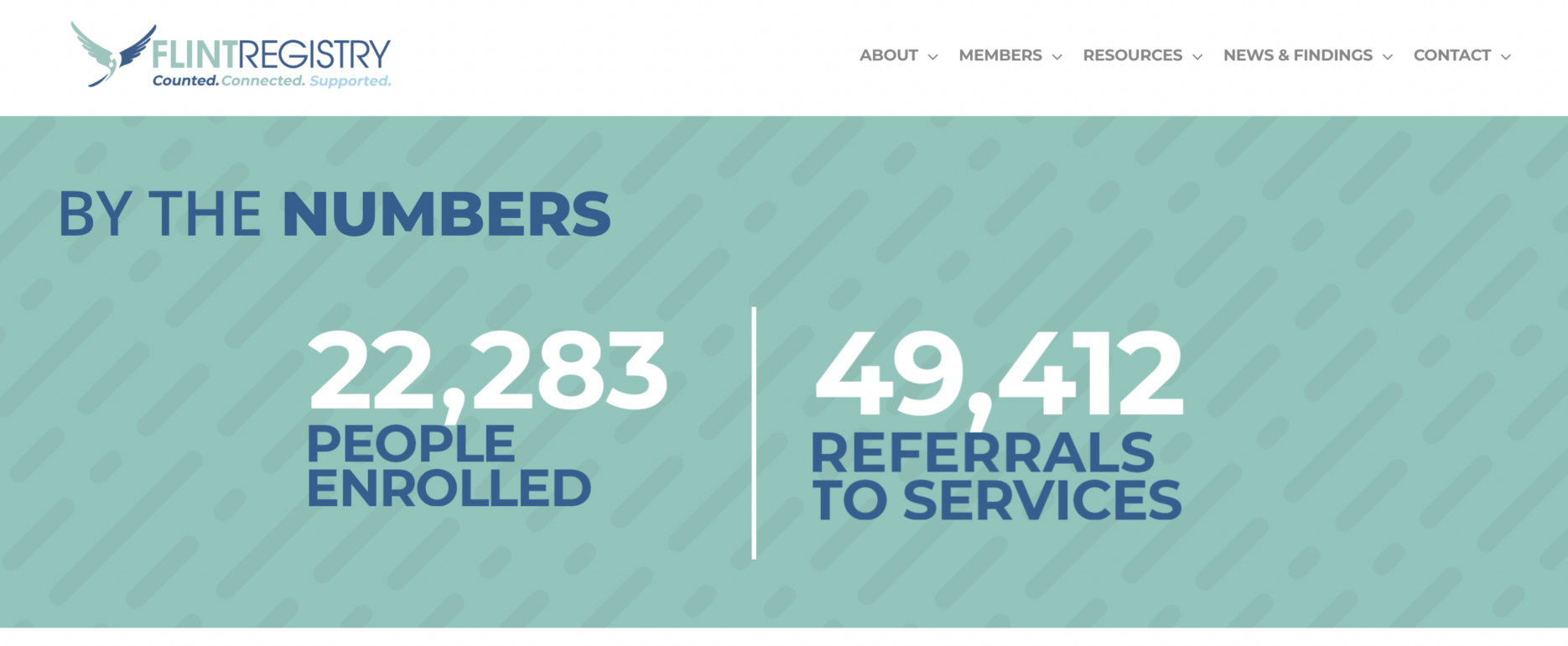
The Registry has enrolled more than 22,000 people and made more than 35,000 referrals to services and resources. Although original enrollment is now closed, the Flint Registry continues to provide information, resources, updates, and opportunities for current members to participate in follow-up activities.
Continue Exploring Health Equity in Flint
Health is influenced by many interconnected factors. Explore other areas within the interactive Flint community page to learn more about housing, transportation, food access, environmental conditions, community resources, and other conditions that shape health. Visit the Community page here.
